

Artificial intelligence is rapidly reshaping how creative work is produced, edited, and distributed. What began as tools for text generation and coding assistance is now expanding into full creative pipelines, spanning design, media production, software development, and collaborative ideation. The latest wave of AI systems is no longer just responding to prompts; they are actively participating in creative workflows, integrating directly into the tools professionals already use.
Recent developments from major AI labs highlight a clear shift: instead of positioning AI as a standalone assistant, companies are embedding it into creative ecosystems, allowing it to function as a co-pilot inside design suites, audio production tools, and visual editing platforms. This evolution signals a broader transformation in how creative industries operate, where AI is becoming a structural layer in production rather than an external add-on.
From Chat Interfaces to Embedded Creative Systems
Earlier generations of AI tools were largely confined to conversational interfaces. Users would request outputs such as copy, code snippets, or images and then manually transfer those outputs into external tools. That workflow is now being replaced by integrated systems that allow AI to operate directly within creative environments.
New integrations enable AI systems to interact with professional software such as design platforms, video editors, 3D modeling tools, and music production suites. Instead of simply suggesting ideas, these systems can now execute multi-step workflows, adjusting layers in an image editor, modifying animation parameters in 3D software, or restructuring audio tracks in a digital audio workstation.
This shift significantly reduces friction in creative production. Tasks that previously required switching between multiple applications can now be completed within a single conversational workflow, with the AI acting as an intermediary layer between intent and execution.
AI as a Creative Co-Worker, Not Just a Tool
One of the most important conceptual changes in this evolution is the reframing of AI from “tool” to “collaborator.” Rather than replacing creative professionals, these systems are increasingly positioned as assistants that extend human capability.
In practice, this means AI can:
- Translate abstract ideas into structured visual or technical outputs
- Suggest design variations based on stylistic input
- Automate repetitive or technical tasks in production pipelines
- Help users learn complex creative software through guided interaction
For example, instead of manually navigating complex design interfaces, users can describe what they want to achieve, and the AI will execute or guide them through the necessary steps. This lowers the barrier to entry for non-experts while accelerating workflows for professionals.
However, this collaborative framing also introduces new questions about authorship, control, and creative decision-making.
Lowering Barriers to Professional-Grade Creativity
One of the most significant impacts of AI integration into creative tools is accessibility. Tasks that once required years of training in specialized software can now be partially executed through natural language interaction.
This democratization of creative production is particularly visible in areas such as:
- Graphic design and visual prototyping
- Video editing and content creation
- Music composition and audio engineering
- Product mockups and interface design
By abstracting away technical complexity, AI enables a wider range of users to produce high-quality creative work. Entrepreneurs, marketers, educators, and independent creators can now generate polished outputs without deep technical expertise in each domain.
This does not eliminate the role of skilled professionals, but it does shift their focus toward higher-level creative direction rather than manual execution.
The Rise of Multi-Tool Creative Workflows
Modern creative work rarely happens in a single application. Designers, developers, and media professionals typically move across multiple tools to complete a project. AI is now beginning to act as a connective layer across these fragmented workflows.
Instead of manually exporting and importing assets between platforms, AI systems can translate formats, restructure data, and synchronize content across environments. This reduces the operational overhead of managing complex creative pipelines.
In practical terms, this means:
- Design assets can be adapted automatically for different platforms
- Code-based design systems can be updated dynamically
- Audio and video elements can be restructured across editing tools
- Visual prototypes can be iterated without rebuilding from scratch
By bridging these gaps, AI reduces friction in the creative process and enables faster iteration cycles.
Automation Without Eliminating Creativity
A common concern surrounding AI in creative industries is the fear that automation will replace human creativity. However, current implementations suggest a different trajectory.
Rather than replacing creative decision-making, AI is increasingly handling execution-heavy tasks – those that are repetitive, technical, or time-consuming. This allows human creators to focus more on conceptual development, storytelling, and aesthetic direction.
For example, AI can generate multiple design variations, but the selection, refinement, and final artistic judgment still rest with the human user. Similarly, AI can structure a video timeline, but creative direction and narrative decisions remain human-led.
This division of labor suggests a hybrid model of creativity, where humans and machines contribute different strengths to the same workflow.
Learning and Skill Acceleration Through AI Assistance
Another emerging trend is the use of AI as a real-time learning assistant for creative tools. Instead of relying solely on tutorials or documentation, users can now ask AI systems to explain techniques, demonstrate workflows, or guide them through unfamiliar features.
This creates a dynamic learning environment where education is embedded directly into the creative process. Users are not just producing work, they are simultaneously learning how to improve it.
Over time, this could significantly reduce the skill gap between beginners and professionals, while also accelerating onboarding for complex software ecosystems.
Control, Consistency, and Trust Challenges
As AI becomes more deeply embedded in creative workflows, new challenges are emerging. One of the most important is maintaining control over automated systems.
When AI systems execute multi-step creative processes, small errors in interpretation can cascade into larger production issues. This raises questions about:
- Version control in AI-assisted workflows
- Reliability of automated design or editing decisions
- Transparency in how outputs are generated
- Consistency across large creative teams
There is also the challenge of creative trust. Professionals need assurance that AI-generated outputs align with brand standards, artistic intent, and technical requirements. Without clear oversight mechanisms, automation can introduce inconsistency into otherwise structured creative systems.
The Future of Creative Work Is Hybrid
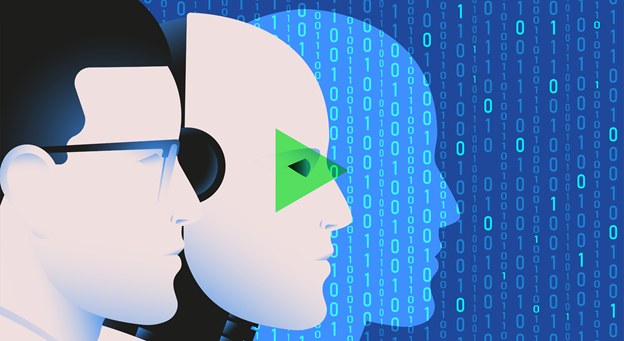
The direction of travel is increasingly clear: creative industries are moving toward hybrid workflows where human creativity and machine intelligence operate in tandem.
Rather than replacing designers, editors, or creators, AI is becoming part of the infrastructure that supports them. It handles complexity, reduces repetitive effort, and accelerates iteration cycles, while humans retain control over vision, judgment, and final output.
This hybrid model represents a significant shift in how creative labor is structured. The value of human input is reallocated toward higher-level thinking and decision-making.
Creativity Is Becoming a System, Not Just a Skill
The integration of artificial intelligence into creative workflows marks a fundamental shift in how content is produced. Creativity is no longer confined to individual skill sets or isolated tools. It is becoming a system, one that blends human intuition with machine execution.
As these systems continue to evolve, the most successful creators will likely be those who learn how to collaborate effectively with AI, using it not as a replacement for creativity, but as an extension of it.


