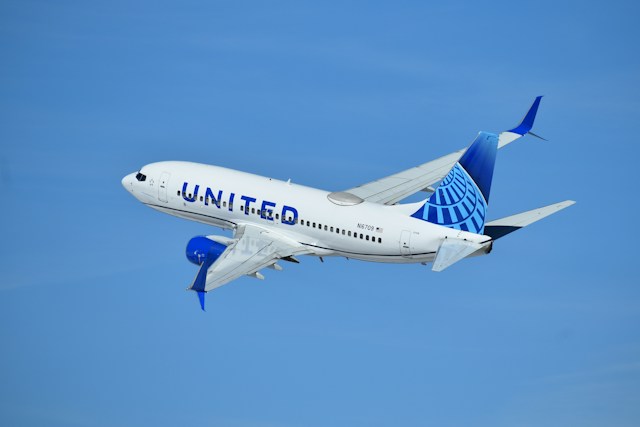
United Airlines is tightening restrictions on how artificial intelligence tools interact with its booking systems, drawing a line between AI assistants that help travelers research flights and autonomous agents that complete purchases on their behalf. The policy, announced November 11, 2026, reflects growing concerns about data security, account access, and the challenges of allowing software to conduct transactions within highly regulated industries.
The move is significant for the technology sector because AI agents are increasingly being designed to perform tasks traditionally handled by people. Instead of simply providing recommendations, these systems can navigate websites, enter customer information, compare prices, and proceed through checkout. United’s decision highlights the security and operational questions that emerge when autonomous software gains access to sensitive commercial systems.
United Targets Unauthorized Third-Party AI Agents
United says it is restricting unauthorized personal AI agents from accessing its digital platforms, including through travel agencies and booking aggregators. The airline is updating its booking, ticketing, and distribution policies to prevent these tools from completing transactions without permission.
The restrictions extend beyond standalone AI applications – they also cover automated browser features, extensions, and other tools that act on a customer’s behalf without United’s authorization. Travel agencies and booking platforms cannot simply deploy third-party AI agents to complete United reservations. Their own AI tools also require the airline’s approval.
The policy does not mean every use of AI in travel research is prohibited. An assistant may still help a traveler compare destinations or identify available flights, but the ability to complete a purchase or manage a reservation is a separate matter. United’s position is that unauthorized agents cannot transact through its systems.
The airline also said it would not cancel reservations made by AI agents before November 11, although it encouraged customers to review those bookings for accuracy.
United outlined its position in its November 11 announcement, emphasizing the need to protect customer information and maintain control over account activity.
Account Credentials Create a New Security Challenge
One of United’s primary concerns involves the information AI agents need to complete transactions. Booking a flight can require access to names, birth dates, payment details, travel preferences, loyalty accounts, and other personal information. When an agent operates through a customer’s account, it may also require login credentials or authorization to make changes.
That creates a broader security concern. Giving an external application access to an account introduces another point where sensitive information could be exposed, mishandled, or used in ways the customer did not intend.
An AI agent could select the wrong flight, purchase an unwanted upgrade, change an existing reservation, or redeem frequent-flyer miles without the traveler fully understanding what is happening. Even when a customer authorizes an agent to perform a task, the system may misinterpret an instruction or take an unintended action.
These risks are not exclusive to travel. Any AI tool with permission to interact with financial accounts, shopping platforms, business software, or customer databases can potentially create problems if its permissions are too broad or its actions are not adequately monitored.
The issue also complicates responsibility. If an AI agent makes an unauthorized purchase or changes a reservation, questions can arise about whether the customer, the AI provider, the platform granting access, or another service involved in the transaction is responsible.
Human Verification Remains Important in Regulated Transactions
United also pointed to regulatory requirements as a reason for restricting automated activity. The airline specifically referenced flight check-in, which requires travelers to acknowledge that checked baggage does not contain prohibited materials, including explosives.
This illustrates a limitation of fully autonomous transaction systems. Some commercial processes involve more than entering information and completing a payment. They require a person to make an acknowledgment or provide confirmation tied to a legal or safety obligation.
An AI agent may be able to navigate a check-in page and select the appropriate options, but that does not necessarily mean it should be permitted to make a required declaration on a passenger’s behalf. A transaction can be technically possible without being appropriate under the rules governing that service. AI platforms must account for regulatory requirements and human authorization, not simply optimize for task completion.
United’s announcement references potential conflicts with Federal Aviation Administration and Department of Transportation requirements. The airline did not identify a specific enforcement action involving an AI agent, so its statement should be understood as a warning about potential compliance risks rather than evidence that an agent has already violated those rules.
The Technical Challenge – Controlling Access to Commercial Platforms
The policy also raises questions about how companies identify and manage automated activity.
Traditional website security systems already distinguish between human visitors, conventional bots, and automated scripts. Businesses use authentication controls, rate limits, bot detection, application programming interfaces, and monitoring systems to manage access to their platforms.
AI agents complicate that distinction. Some operate through browser interfaces and can interact with websites in ways that resemble human behavior. Others use APIs or intermediary services to retrieve information and complete transactions. An agent may also work across several platforms, passing customer information between applications as it carries out a request.
This creates additional demands for identity verification, permission management, and transaction monitoring. A company may need to determine not only who owns an account, but also which software is accessing it, what authority that software has, and what actions it is allowed to perform.
A more controlled approach could involve approved integrations that give AI agents access to specific information or functions without granting unrestricted control over customer accounts. For example, an airline could allow an authorized agent to retrieve flight schedules and fare information while requiring a customer to approve the final purchase through a secure confirmation process.
Such a model would separate information access from transaction authority. It could also create a clearer record of which actions were initiated by a customer, an AI agent, or an approved service provider.
United has not announced a specific technical framework or list of approved third-party agents. Its current position is centered on restricting unauthorized access while evaluating how these systems develop.
Airlines and Technology Companies Are Taking Different Approaches
United’s decision comes as businesses across several industries reconsider how autonomous AI tools should interact with their platforms.
Some companies have restricted third-party agents because of concerns about account security, privacy, automated purchases, and system traffic. Others are exploring partnerships that allow AI tools to access selected services through approved integrations.
Reuters reported that Amazon has blocked Meta’s Muse agent, while Walmart has taken a more cooperative approach through a partnership. Online travel companies, including Expedia and Booking.com, have also pursued AI-related initiatives and integrations.
Airlines are not necessarily following a single strategy. Delta has indicated that certain AI assistants can complete bookings when they are appropriately authenticated, with additional safeguards for sensitive transactions. Southwest has also explored ways for customers to access flight information through ChatGPT.
The differences illustrate an emerging divide in the technology market. Some businesses view autonomous agents as potential customers and new distribution channels. Others see them as intermediaries that could weaken control over customer relationships, account information, and transaction processes.
For airlines, the issue also involves the economics of booking distribution. When an outside agent controls the purchasing process, the airline may have less influence over how customers discover fares, compare options, and complete reservations. Automated searches can also generate substantial traffic, creating additional demands on reservation infrastructure.
Why AI Developers Need More Than Better Automation
The ability to complete a transaction is becoming a selling point for AI agent developers. Tools that can research a trip, compare prices, and purchase a ticket offer a more direct form of automation than chatbots that simply provide instructions or links.
However, reliable agentic software requires more than the ability to navigate a website. Developers must address identity verification, secure credential handling, transaction authorization, error recovery, audit trails, and limits on what an agent can do independently.
Permission systems are especially important. A user might authorize an AI assistant to search for flights but not to purchase a nonrefundable ticket, change an existing reservation, or spend loyalty points. Those distinctions need to be reflected in the software’s access controls.
Human approval can also serve as an important safeguard. Requiring confirmation before high-impact actions, such as payments, account changes, or legally significant declarations, can reduce the consequences of an agent misunderstanding an instruction.
For businesses integrating AI into existing applications, this means security and governance need to be part of the development process rather than added after an agent has been deployed. Organizations should define the boundaries of automated access, monitor agent activity, and establish procedures for reversing or investigating unintended actions.
The Next Stage of Agentic AI Will Depend on Trust and Authorization
United’s restrictions highlight a central challenge facing the development of autonomous AI: companies must decide how much authority to give software that acts on behalf of customers.
The technology may make routine tasks faster, but its usefulness depends on access to the systems where those tasks occur. If businesses cannot verify an agent’s identity, limit its permissions, and maintain control over sensitive transactions, they may choose to block it entirely.
That creates an important challenge for AI developers and the companies whose platforms they want to access. The next stage of adoption will likely require clearer agreements about authentication, data handling, transaction approval, and accountability.
United’s announcement does not establish that airlines will broadly reject AI agents. It does show that access to commercial platforms cannot be assumed simply because a customer wants an AI assistant to act on their behalf. As autonomous software becomes more capable, secure integration and clearly defined permissions will be essential to earning the trust of businesses and consumers.