

Artificial intelligence (AI) has often been portrayed as a disruptive force in the workplace, one that could replace humans rather than complement them. Headlines warning about “robots taking jobs” have fueled anxiety for decades, but a growing number of companies are demonstrating that AI does not have to be a replacement, it can be a powerful tool for augmenting human work, enhancing productivity, and improving decision-making. By focusing on augmentation rather than automation, businesses are finding ways to leverage AI while maintaining, and even expanding, their human workforce.
AI as a Collaborative Partner
AI excels in handling repetitive, data-intensive tasks, freeing employees to focus on more strategic, creative, and relationship-driven work. In customer service, for example, chatbots and AI-driven ticketing systems can handle routine queries, tracking shipments, resetting passwords, or providing FAQs, while human agents focus on complex customer issues that require empathy and judgment.
Take Zendesk, a company providing customer service software. Their AI tools automatically categorize and prioritize incoming support tickets, suggesting potential responses. However, rather than replacing support agents, the system augments their capabilities, enabling agents to respond faster and more accurately. The human element remains critical for nuanced conversations, complex problem-solving, and maintaining customer satisfaction.
Similarly, in the medical field, AI-powered diagnostic tools help radiologists and doctors identify patterns in medical imaging. Companies such as Aidoc offer AI solutions that analyze CT scans for potential abnormalities, flagging areas of concern for human review. This does not replace radiologists but allows them to work more efficiently, reducing the risk of oversight and improving patient outcomes. Radiologists still provide the final interpretation, judgment, and communication with patients, demonstrating a complementary partnership between human expertise and AI speed.
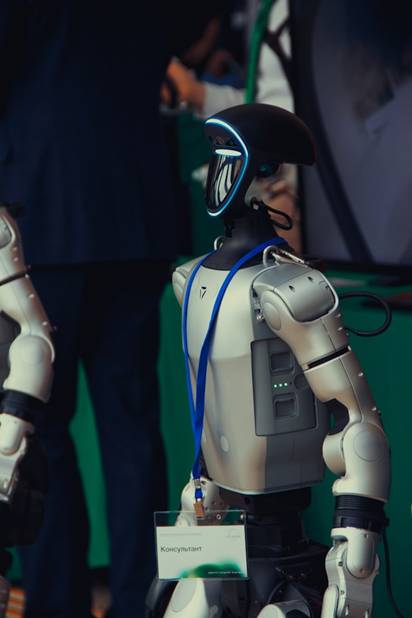
Enhancing Decision-Making
Another significant application of AI is decision support. Rather than replacing managers, AI helps them make more informed choices. Financial services are a prime example. AI models can analyze vast amounts of market data to identify trends, forecast risks, and detect anomalies. Firms like Goldman Sachs and J.P. Morgan use AI to provide traders and analysts with real-time insights, enabling faster and more accurate investment decisions. Human oversight is essential to interpret these predictions and account for factors that AI cannot capture, such as geopolitical events or regulatory changes.
In marketing and sales, AI tools like predictive analytics and customer segmentation algorithms enable businesses to target campaigns more effectively. HubSpot uses AI to suggest optimal times to send emails, identify high-potential leads, and recommend content strategies based on user engagement. Marketing teams remain the creative force, crafting messaging and shaping campaigns; AI simply provides actionable insights that improve efficiency and ROI.
Real-World Examples of AI Augmentation
Several companies across industries illustrate how AI can enhance human work without reducing headcount:
Manufacturing
At Siemens, AI monitors production lines for maintenance issues and quality control. Machines equipped with AI can predict potential failures and alert technicians in advance. This predictive capability augments human technicians, allowing them to focus on critical maintenance tasks rather than routine inspections. It increases uptime, improves safety, and optimizes resources, all without eliminating jobs.
Retail
Retailers like Walmart use AI for inventory management. Systems predict demand, optimize stock levels, and suggest restocking schedules. Store associates are not replaced; instead, AI frees them from manual stock checks, allowing them to focus on customer service, merchandising, and in-store experiences. Similarly, AI-powered tools help cashiers identify unusual transactions or potential fraud, serving as an assistant rather than a replacement.
Legal Services
Law firms have adopted AI tools like ROSS Intelligence, which uses natural language processing to help attorneys research case law efficiently. The AI can sift through thousands of documents in minutes, providing relevant precedents and citations. Lawyers still interpret and apply the findings, negotiate contracts, and advocate for clients, but the AI reduces the time spent on labor-intensive research, allowing attorneys to dedicate more attention to high-value tasks.
Human Resources
AI also augments HR teams. Tools can screen resumes, analyze candidate profiles, and even flag potential diversity gaps in hiring pipelines. Platforms such as HireVue combine AI-driven video assessments with human evaluation, helping HR professionals focus on interviews and culture fit rather than preliminary screenings. AI accelerates processes, but human judgment remains central to hiring decisions.

The Human-AI Balance
Central to the successful integration of AI is understanding its role as a complement rather than a substitute. Businesses that emphasize augmentation tend to follow certain principles:
Empowering Employees – AI is positioned as a tool that enhances employee capabilities rather than replacing them. Training employees to use AI effectively ensures that technology improves productivity without threatening jobs.
Transparency – Employees understand how AI works and what decisions it influences. This reduces fear and builds trust in AI as a partner.
Task Division – Routine, repetitive, or data-heavy tasks are automated, while humans retain tasks requiring judgment, creativity, and interpersonal skills. This maximizes efficiency without diminishing human roles.
Continuous Learning – Employees receive ongoing training on new AI tools, keeping their skills relevant as technology evolves. This helps avoid displacement and promotes long-term workforce stability.
Addressing Common Misconceptions
Many workers fear AI will inevitably lead to layoffs, but evidence suggests that augmentation often creates new opportunities. By offloading repetitive tasks to AI, employees can take on higher-value work, gain new responsibilities, and develop specialized skills. For example, in accounting, AI can reconcile accounts and flag inconsistencies, but accountants then focus on financial analysis, forecasting, and strategic advising. This shift enhances job satisfaction and professional growth.
Furthermore, AI-driven efficiency gains can allow companies to expand, hire more personnel, and offer new services, demonstrating that AI doesn’t have to shrink the workforce; it can help it grow.
The Future of AI-Augmented Work
The trajectory of AI in the workplace is moving toward collaborative intelligence, where humans and machines work together. Augmentation is not just a temporary trend; it is likely to define the next decade of work across industries.
Companies that embrace this model can benefit from:
- Increased productivity without layoffs
- Enhanced employee engagement through higher-value work
- Faster, data-driven decision-making
- Improved customer experiences across service industries
The key will be balance: leveraging AI to perform tasks it does best while empowering humans to do what they do best – problem-solving, creativity, and relationship-building.
Technology That Elevates, Not Eliminates, Jobs
AI does not have to be synonymous with job loss. When implemented thoughtfully, AI can augment human work, increase efficiency, and create new professional opportunities. From healthcare and finance to retail and legal services, businesses are demonstrating that technology can serve as a strategic partner, complementing human expertise rather than replacing it. By emphasizing collaboration, transparency, and skill development, organizations can harness AI’s potential while preserving and even enhancing the human workforce.
The future of work is not AI versus humans; it is AI with humans, combining the precision and speed of technology with the creativity, judgment, and empathy that only people can provide.


