

For many people, social media has become so embedded in daily life that its presence fades into the background. Checking notifications, scrolling through feeds, and reacting to updates happen almost automatically, often without conscious intention. The idea of stepping away, even briefly, can feel unrealistic or uncomfortable. Yet spending a week without social media offers a rare opportunity to observe how deeply these platforms shape behavior, attention, and routine. What becomes apparent is not simply a story about distraction, but a broader insight into habit formation, dependence, and how digital systems influence the structure of everyday life.
The Invisible Role of Social Media in Daily Routines
One of the first revelations that surfaces during a social media hiatus is how tightly these platforms are woven into daily routines. Many people do not intentionally plan time for social media use. Instead, it fills transitional moments – the first minutes after waking up, pauses between tasks, commutes, or the last moments before sleep. Removing social media from these gaps exposes how frequently the mind reaches for stimulation during moments of stillness.
Without the familiar reflex of opening an app, these transitional spaces suddenly feel longer and more noticeable. The absence highlights how social media functions as a default activity, replacing boredom, reflection, or idle observation. This shift reveals that much of social media use is less about content consumption and more about habit-driven behavior triggered by time, context, or emotional state.
Withdrawal, Discomfort, and Behavioral Dependence
Within the first day or two of abstaining, many people experience mild withdrawal-like symptoms. These can include restlessness, an urge to check the phone, or anxiety about missing updates. While these reactions are not comparable to substance withdrawal, they point to behavioral dependence rooted in reinforcement loops.
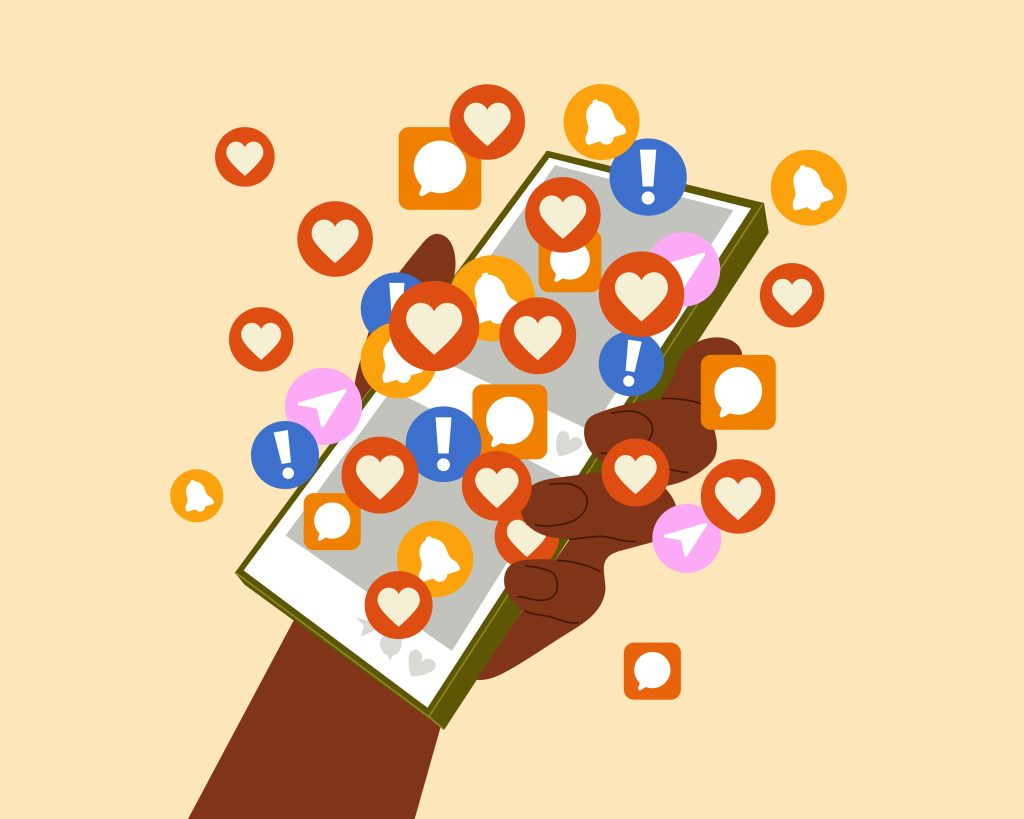
Social media platforms are designed around variable rewards. Notifications, likes, comments, and new content appear unpredictably, encouraging repeated checking. When access is removed, the brain initially reacts to the absence of these cues. The urge to reach for the phone often persists even when the user knows there is nothing to check.
This discomfort reveals how dependence is not always about conscious desire. It is frequently driven by conditioning. Over time, the brain associates certain emotional states – boredom, stress, curiosity – with social media as a solution. Removing the platform disrupts that association, forcing individuals to confront the underlying emotion rather than instantly soothing it with digital engagement.

Attention Span and the Return of Sustained Focus
As the week progresses, many people notice subtle but meaningful changes in attention. Without the constant pull of notifications and feeds, the mind experiences fewer interruptions. Tasks that once felt fragmented begin to flow more smoothly. Reading for longer periods, completing work without frequent breaks, or engaging deeply in conversations becomes easier.
This shift highlights how social media fragments attention rather than simply consuming time. Even brief interactions, such as checking a notification, can disrupt cognitive momentum. Over time, these micro-interruptions condition the brain to expect constant novelty, making sustained focus feel unnatural.
Living without social media for a week allows attention to recalibrate. While the initial days may feel mentally restless, the later days often bring a sense of clarity and calm. This suggests that attention is not permanently diminished by digital habits, but it does require intentional boundaries to recover.
Emotional Awareness and Mood Regulation
Another insight that emerges is the role social media plays in emotional regulation. Many people use these platforms to manage mood, often without realizing it. Scrolling can provide comfort during stress, distraction from difficult emotions, or validation through social feedback.
Without social media, emotions have fewer digital buffers. Moments of loneliness, frustration, or boredom become more visible. At the same time, positive emotions such as contentment or curiosity may feel more grounded and less dependent on external affirmation.
Some individuals report improved mood stability by the end of the week, while others notice increased emotional intensity. Both outcomes point to the same underlying reality: social media often acts as an emotional intermediary. Removing it exposes emotional patterns that are otherwise softened or masked by constant digital input.
The Myth of Being “Out of the Loop”
A common fear associated with stepping away from social media is the concern about missing important information or becoming socially disconnected. A week without social platforms often challenges this assumption.
While certain updates are missed, most essential information still finds its way through direct communication, news sources, or word of mouth. In many cases, the absence reveals that much of what feels urgent on social media has little lasting relevance. Trends move quickly, conversations shift, and content that once seemed important fades almost immediately.
This realization can reshape perceptions of digital necessity. Being constantly connected does not always equate to being well-informed or socially engaged. In some cases, stepping back allows for more intentional and meaningful interactions, both online and offline.
Changes in Social Interaction and Communication
Living without social media alters how people communicate with others. Without the ability to passively observe updates or engage through likes and comments, communication becomes more deliberate. Reaching out requires intention, whether through direct messages, phone calls, or in-person conversations.
This shift often deepens the quality of interaction. Conversations tend to be longer, more focused, and less performative. At the same time, some connections may weaken or fade, revealing which relationships rely primarily on low-effort digital interaction.
This observation underscores a key behavioral insight: social media maintains a wide network of weak ties, but it can also substitute for deeper engagement. Removing the platform clarifies which relationships are sustained by convenience rather than connection.
Time Perception and Productivity
One of the most tangible outcomes of a week without social media is a change in how time is perceived. Many people are surprised by how much time feels newly available, even if they did not consider themselves heavy users.
This reclaimed time often disperses into other activities rather than consolidating into a single productive pursuit. Reading, walking, cooking, thinking, or simply resting become more frequent. The absence of social media does not automatically lead to higher productivity, but it does create space for choice.
The key insight is that social media often occupies time that would otherwise be undefined. Without it, individuals must decide how to use that space, which can feel both liberating and uncomfortable. This choice-driven time use encourages greater awareness of personal priorities and values.
The Role of Identity and Self-Perception
Social media also plays a significant role in shaping identity. Profiles, posts, and curated content create a digital representation of the self that is continually maintained and evaluated. Stepping away disrupts this ongoing performance.
During a week without social media, many people report a reduced sense of comparison. Without exposure to curated images and narratives, self-evaluation becomes less externally anchored. This can lead to greater self-acceptance or, conversely, discomfort as individuals confront aspects of identity that were previously validated through digital feedback.
This experience reveals how identity is reinforced through repetition and audience response. Removing the platform does not erase identity concerns, but it shifts them from public performance to private reflection.
Reintegrating Social Media With Awareness
The end of a week-long break often brings a decision point. Returning to social media can feel both familiar and jarring. The contrast highlights patterns that were previously invisible, such as automatic checking, emotional triggers, or time distortion.
For some, the experience leads to lasting changes, including reduced usage, disabled notifications, or more selective engagement. For others, old habits quickly return. Both outcomes provide valuable insight into how behavior is shaped by environment, design, and intention.
The key lesson is not that social media is inherently harmful, but that unexamined use carries behavioral costs. Awareness, rather than abstinence, becomes the central takeaway.
Digital Habits as a Technology Design Challenge
A week without social media ultimately reveals that digital habits are not just personal choices, but outcomes shaped by technology itself. Platform architecture, notification systems, algorithmic feeds, and engagement metrics all influence how often people check their phones, how long they stay engaged, and how they regulate attention and emotion. These systems are not neutral; they are intentionally designed to capture time, reinforce return behavior, and minimize friction.
Recognizing this shifts the conversation away from individual willpower and toward digital literacy and responsibility. Understanding how technology influences behavior allows users to make more informed decisions about boundaries, usage, and long-term well-being. It also raises broader questions about the role technology companies play in shaping daily routines at scale, often without users fully realizing the trade-offs involved.
Living without social media for a week does not reject technology, but it reframes the relationship with it. The experience highlights the value of intentional engagement over passive consumption and underscores the need for greater awareness of how digital tools shape modern life. As technology continues to embed itself deeper into personal and professional routines, the ability to step back, evaluate its influence, and choose how it is used may become one of the most important skills of the digital age.


